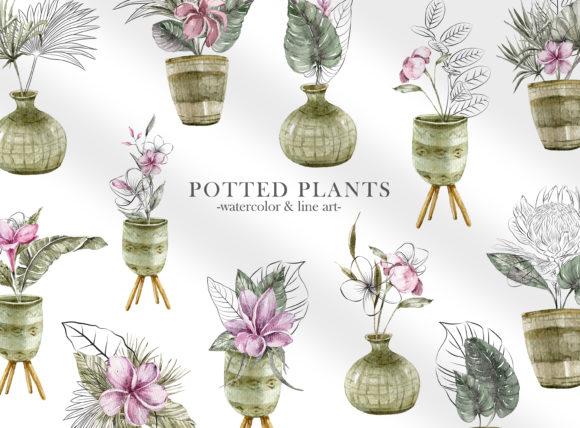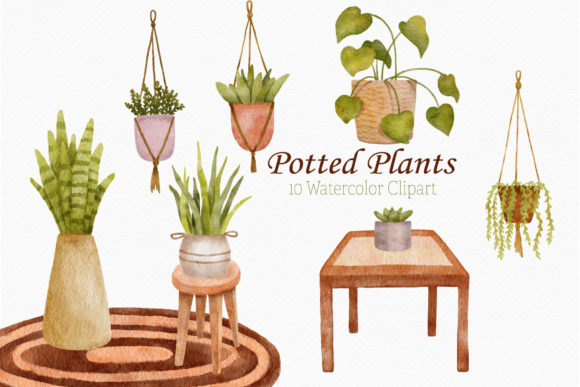
Potted Plant Watercolor Clipart Home Illustrations
As a graphic designer with years of experience in branding, marketing visuals, and digital design assets, I’ve come across countless illustrations that promise to elevate a project. Potted Plant Watercolor Clipart Home is one such asset that caught my attention—not just for its aesthetic appeal, but for its versatility in real-world design scenarios. This collection of watercolor-style potted plant illustrations offers a soft, organic feel that can be a valuable addition to a wide range of creative projects.
First Impressions: A Soft, Natural Aesthetic
The first thing I noticed about Potted Plant Watercolor Clipart Home is the gentle, handcrafted quality of the illustrations. Each plant is rendered with subtle brushstrokes, muted tones, and a sense of warmth that feels authentic. The style is reminiscent of handmade art, making it ideal for brands that want to convey a natural, artisanal vibe. These illustrations don’t scream for attention—they blend well into designs where subtlety and charm are key.
This visual mood makes Potted Plant Watercolor Clipart Home particularly suited for small business branding, handmade products, or seasonal campaigns. It’s perfect for a boutique flower shop, a wellness brand, or an Etsy store selling home decor items. The softness of the artwork invites viewers to feel at ease, which is essential for creating a welcoming brand identity.
Real-World Design Applications
When working on a client project, the practicality of a design asset often determines its usefulness. Potted Plant Watercolor Clipart Home excels in several areas. For instance, in logo design, these illustrations can serve as a focal point or a complementary element that adds character without overwhelming the text. They also work well in brand identity systems where a more organic look is desired over a rigid, modern style.
In packaging design, these illustrations can be used as decorative accents on product boxes, labels, or tags. They add a personal touch that stands out in a crowded market. For social media graphics, they can enhance posts, banners, or story templates, especially for content focused on lifestyle, home, or self-care themes.
When it comes to printable design or Canva templates, Potted Plant Watercolor Clipart Home offers flexibility. Whether it’s a wall art print, a greeting card, or a digital sticker pack, the illustrations maintain their integrity across different formats. They also pair well with various font styles—think handwritten or script fonts that complement the organic feel of the artwork.
Where It Shines: Large Layouts and Themed Projects
This design asset thrives in larger layouts where it can be the centerpiece. It works exceptionally well as a hero graphic on a website, a background for a poster, or a key element in a product mockup. Its soft edges and layered details make it suitable for thematic collections, such as springtime promotions, garden-themed campaigns, or eco-friendly branding initiatives.
For Cricut projects or sticker designs, the illustrations offer a clean, editable format that can be scaled without losing quality. Whether you're creating custom t-shirts, mugs, or tote bags, these clipart pieces provide a cohesive visual language that enhances the final product.
Where to Use with Caution: Minimalist and Corporate Designs
While Potted Plant Watercolor Clipart Home is visually appealing, it may not be the best fit for every project. In minimalist branding or corporate design, where clarity and simplicity are prioritized, these illustrations could appear too busy or distracting. They might also struggle in low-contrast environments, such as dark backgrounds or small sizes, where detail can be lost.
Additionally, if a client requires a very clean visual hierarchy or a highly professional look, this asset may need to be used sparingly. It’s important to test it in different contexts before committing to a design direction.
Design Considerations for Professional Use
Before using Potted Plant Watercolor Clipart Home for a client project, there are several practical checks a designer should perform. First, test the illustrations in black and white to see how they hold up without color. Check contrast on both light and dark backgrounds to ensure visibility. Preview them at small and large sizes to confirm scalability and clarity.
It’s also crucial to place them on real mockups—whether it’s a product box, a social media post, or a website layout—to gauge how they interact with other elements. If the asset includes PNG transparency or SVG files, inspect those for quality and editability. Confirming the commercial license is another critical step, especially when working on print-on-demand or digital product projects.
Why It Matters: Emotional Appeal and Brand Trust
Visuals play a significant role in shaping audience perception. Potted Plant Watercolor Clipart Home contributes to a design’s emotional appeal by evoking feelings of calm, nature, and authenticity. These qualities can help build trust and recognition, especially for brands targeting eco-conscious or lifestyle-focused audiences.
When used thoughtfully, this asset can enhance the overall impression of a design project, making it feel more polished and intentional. It supports the visual hierarchy by adding depth and texture without competing with key messaging. For designers looking to create a cohesive and engaging visual language, this illustration set is worth considering.
Final Thoughts: A Valuable Addition to Any Creative Toolbox
In the right context, Potted Plant Watercolor Clipart Home is a versatile and expressive design asset. It brings a natural, handcrafted feel that can elevate a variety of projects—from small business branding to digital marketing materials. As a designer, I appreciate how it balances creativity with practicality, offering both aesthetic value and functional use.
Whether you're working on a handmade business, a seasonal campaign, or a digital product launch, this collection of illustrations has the potential to enhance your creative vision. Just remember to test it thoroughly and consider the project’s specific needs before incorporating it into your design workflow.